
Key Copies and Replacement Keys in Boston
Spare keys cut to match the ones you have, and new keys for worn or lost ones.
When to Have a Key Cut
A spare is easiest to make while a good key still exists. These are the usual reasons to have one cut:
- You are down to one key. If it goes missing, there is nothing left to copy, and a new key has to be made from the lock.
- A worn key sticks, or turns only after some jiggling. A copy cut from a better key often works better; one cut from the worn key copies the wear.
- A key is lost. If it was on its own, a copy from another key restores your spare; if it was with your address, a rekey may be the better answer.
- Someone else needs one: a family member, a sitter, a dog walker or a friend looking in on the house.
- A key is stamped “do not duplicate.” The stamp is a request from whoever issued the key, so it is worth asking them before a copy is made.
Key Types and What Each Needs
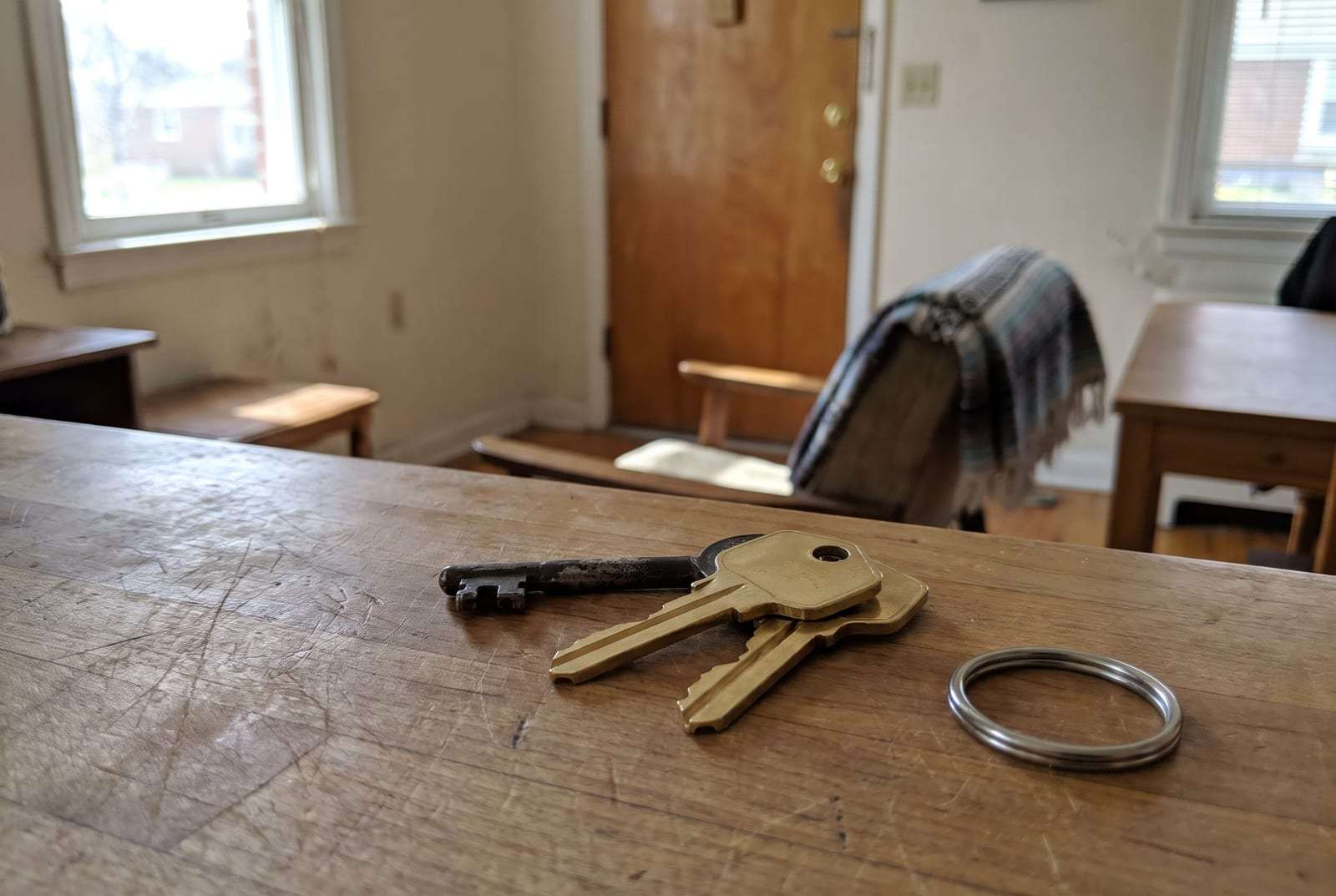
Every copy starts as a blank: an uncut key whose profile matches the lock’s keyway, the shaped slot the key slides into. The key you bring is clamped beside the blank in a cutting machine, which traces its cuts onto the new one.
Most house keys copy without trouble. Others need a particular blank, the permission of whoever issued them, or a different method altogether.
| Key type | What it looks like | Can it be copied easily | What to bring |
|---|---|---|---|
| Standard house key | A flat brass or nickel key with notches cut along one edge | Yes, from a key in good shape | The key itself, the least worn one you have |
| Office or storefront key | Like a house key, often a little longer, with more cuts | Usually, unless the keyway is restricted | The key, and the go-ahead of whoever manages the building’s keys |
| Worn key | Notches rounded off, edges polished smooth, the stamp on the head faint | A straight copy repeats the wear; cutting to the original depths works better where they can be read | Every copy you have, so the best one can be used |
| Key stamped “do not duplicate” | An ordinary key with those words on the head | The stamp does not stop a machine, but many locksmiths ask for the issuer’s permission first | Permission from the landlord, manager or owner who issued it |
| Restricted key | An unusual profile, often with a number stamped on the head | Not at an ordinary key counter: its blanks come only through whoever set up the system | The card or signature the system asks for |
| Dimple key | Flat sides with small drilled cups instead of notches along the edge | Sometimes, on the right machine; many are restricted | The key, and any card that came with the lock |
| Old bit key | A round shank with a small flag-shaped bit at the end, for old interior mortise locks | Usually, by cutting a blank to match or fitting one to the lock | The key; with none left, a new one is fitted at the door |
| No key at all | Every key lost, or the only one broken beyond use | Nothing to copy: a key is fitted to the lock, or the lock is rekeyed and new keys cut | Proof that the door is yours |
When a New Copy Does Not Turn Smoothly
Why does a copy of my key not work as well as the original?
A copy is only as good as the key it was traced from. The machine follows every rounded notch on a worn key, so the copy starts out as worn as the original, and a copy of a copy adds a little error each time.
The blank matters too. Two blanks can fit the same keyway yet differ slightly in thickness, or in where the shoulder sits, the stop that sets how far the key goes in, and that shifts every cut a fraction. Fresh cuts can also leave fine burrs that catch on the pins until they are filed off.
Sometimes the copy is accurate and the lock is the trouble: worn pins and a tired cylinder can wear to fit one old key and balk at a sharper one. When the key and the lock are both worn, a lock repair or a rekey with fresh keys is the lasting fix.
Can a key be made if every copy is lost?
Usually. A locksmith can fit a new key to the lock as it stands, or rekey the lock and cut new keys to suit it. If the lost keys could turn up in the wrong hands, the rekey is the safer of the two.
Should my address go on a key tag?
Better not. A lost key with an address on it is a key to a known door. A colored cap, or a word only your household understands, does the same job without pointing anyone to the house.
Duplicate Keys for Landlords and Property Managers
When an apartment turns over and its locks are changed, everyone who needs a key needs one cut to the new pins: the incoming household, often with a copy for each adult, and the owner’s or manager’s own set. Cutting every copy from the new key at once keeps each one a first copy, never a copy of a copy.
For a building with several units, a simple key log saves trouble at the next turnover: which key fits which door, how many copies were cut and who holds them.
Spare and Replacement Keys Cut to Match
Call to ask whether a particular key can be copied, or ask for an estimate when a whole building’s worth of keys needs cutting.