
Lock Rekeying in Boston
Changing which keys open your locks while the locks themselves stay on the door.
Reasons to Rekey a Lock
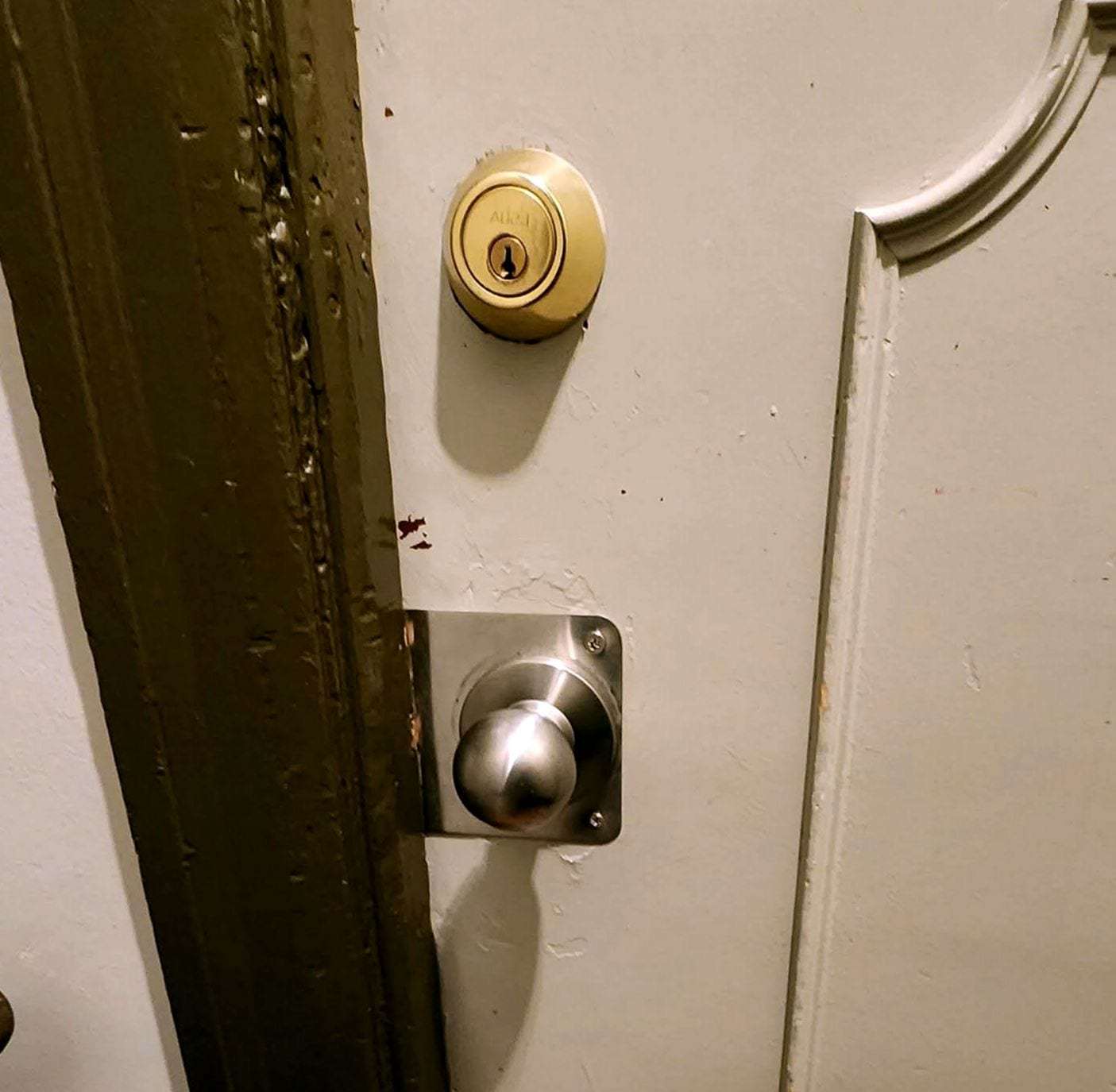
To rekey a lock is to change which key opens it without taking it off the door. The lock, its finish and the holes it sits in stay as they are; only the small parts inside change, along with the keys.
It is the usual answer when keys have gone somewhere you cannot follow:
- You have just moved in. A seller, a former tenant, a cleaner or a neighbor who once watered the plants may all still have a key.
- A set of keys is lost, and you would rather not wonder where it ended up.
- A former tenant, roommate or contractor still has a key, or a copy of one.
- A key was stolen, especially along with something that shows your address.
- You want every door on one key instead of a ring of keys that all look alike.
What Changes Inside the Cylinder
Most house locks work with a pin tumbler cylinder, the round part the key slides into. Inside it sit small spring-loaded pins, stacked in pairs of different lengths. The cuts on the right key lift each pair just far enough that the gap between its two pins lines up with the edge of the plug, the part that turns, and the lock opens. A key with different cuts leaves at least one pin across that edge, and the plug stays put.
Rekeying replaces the lower pin in each pair with one of a new length, matched to a new key. The cylinder comes out of the knob or the deadbolt, the plug is slid out and repinned, and everything goes back together. The old keys still slide in, but they no longer line the pins up, so they will not turn.
What a rekey cannot do is undo wear. A lock with tired springs, a cracked housing or a bolt that drags behaves just the same with new pins inside it.
Older Mortise Locks
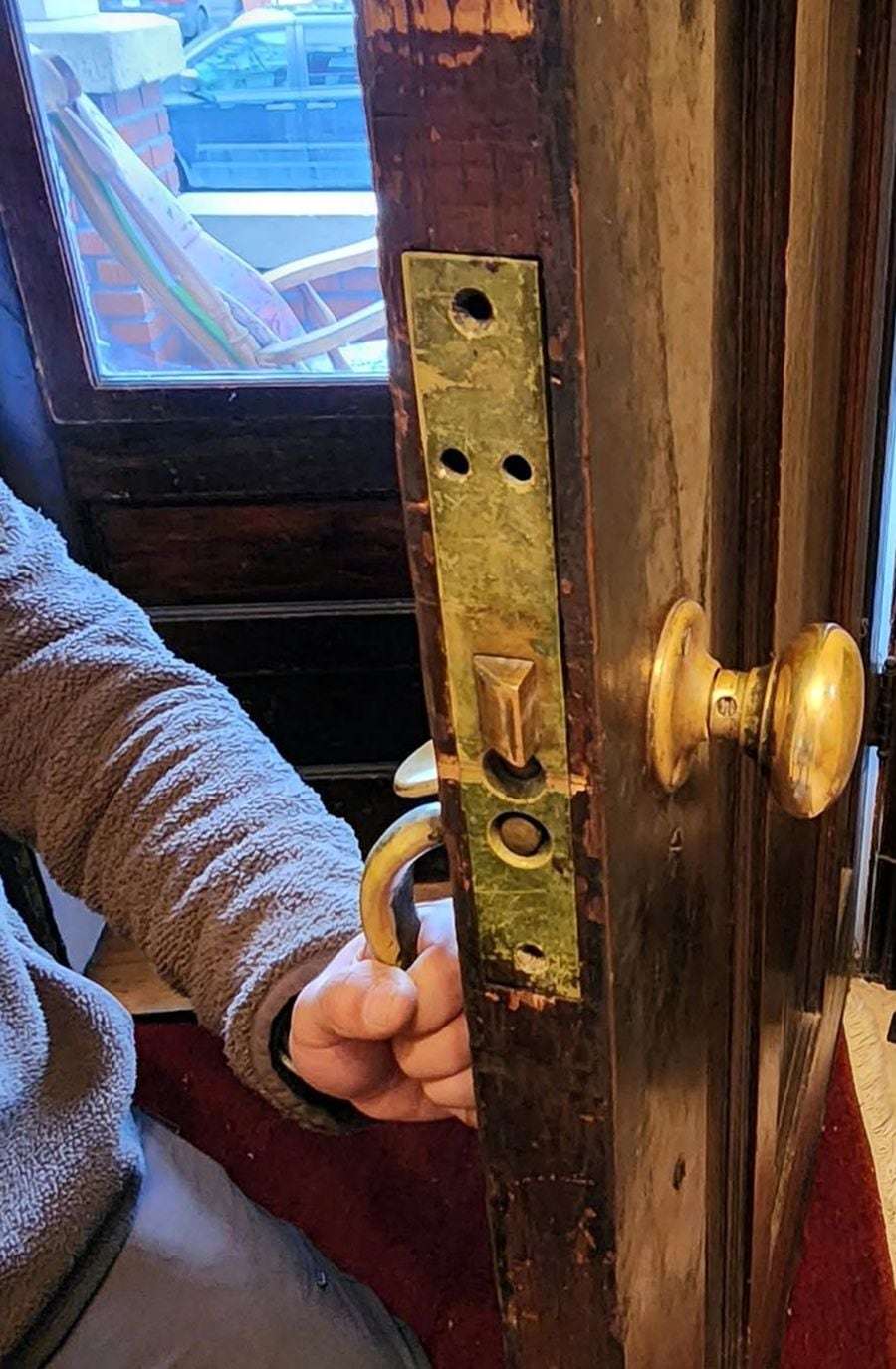
Many older Boston front doors carry a mortise lock: a flat steel case set into a pocket cut in the edge of the door, with the latch, the deadbolt and the knob spindle all working through one body. Its cylinder is a threaded barrel screwed into the case from outside and held by a set screw reached from the edge of the door, behind the faceplate.
That cylinder can usually be unscrewed and rekeyed like any other, which keeps an old lock and its trim on the door while the keys change. When the case itself is worn, repinning the cylinder will not fix it, and the choice becomes a repair or a new lock.
Choosing Between a Rekey and a New Lock
Both stop old keys from working. The difference is whether the lock itself has a problem, or whether you want something different on the door.
| Situation | Rekey | Replace the lock | Why |
|---|---|---|---|
| Just moved in | Usually all that is needed | Only if the hardware is worn or you want a different style | The lock works; the keys you cannot account for are the problem |
| A set of keys is lost | Enough in most cases | Rarely needed | New pins make the lost keys useless, wherever they turn up |
| Keys stolen along with your address | Right away | Worth weighing if the lock is old or flimsy | Whoever has the keys may know which door they open |
| A former tenant or contractor kept a key | The usual choice | Only when the lock itself is worn | Only the keys need to change |
| The key sticks or the bolt drags | Will not cure it | Sometimes, once the cause is found | The fault is in the parts or the door, a matter for lock repair |
| Every door on one key | Works when the locks take the same key blank | Needed for locks that take different blanks | A single key fits only cylinders that share its keyway |
| The lock was damaged in a break-in | Not enough on its own | Usually the right call | Bent or cracked parts cannot be repinned back to strength |
Keying Several Doors Alike
Can all my locks be made to work with one key?
Often, yes. When your locks take the same key blank, which usually means their keyways come from one maker, each cylinder can be rekeyed to the same set of pins, and the front door, the back door and the deadbolts all open with a single key. This is called keying alike.
Locks from different makers usually take different blanks, and no single key fits them all. Then one or more cylinders, or whole locks, are replaced with ones that share a keyway, and the set is keyed alike from there.
Businesses often want something a step further: a master key system, in which each door keeps its own key and a master key opens all of them, so staff carry one key instead of five. It takes more planning than keying alike, since every key and every door has to fit the plan, and a written record of who holds which key keeps it working as people come and go.
Does rekeying make a lock harder to pick?
No. Rekeying changes which key opens the lock, not how well the lock stands up to picking or drilling. That takes a different part altogether, a high-security cylinder, often chosen for back doors and storerooms.
Can I rekey my own locks?
Some newer home locks can be reset by the owner with a working key and the maker’s tool. Most others have to be taken apart, repinned from a kit of pins in many lengths and put back together, and their springs and pins are small enough to vanish on a kitchen table.
Lock Changes Between Tenants
When an apartment turns over, the last tenant’s keys, and any copies they had cut, should stop working before the new tenant moves in. Rekeying the apartment door’s deadbolt and knob does that without new hardware, and the locks keep matching the rest of the building.
Landlords with several units usually give each apartment its own key, while the building’s street door often takes a key every tenant holds; when someone moves out, that street door is worth thinking about too. The incoming tenant’s keys, and spares for the owner’s set, are duplicate keys cut to match the new pins.
New Keys for the Locks You Already Have
Call about a rekey after a move, a lost set or a change of tenants, or ask for an estimate when several doors are to be keyed alike.