
Deadbolt and Lock Installation in Boston
New deadbolts, knobs, levers and keypad locks, fitted to doors that need more security than they have.
When a Door Needs a New Lock
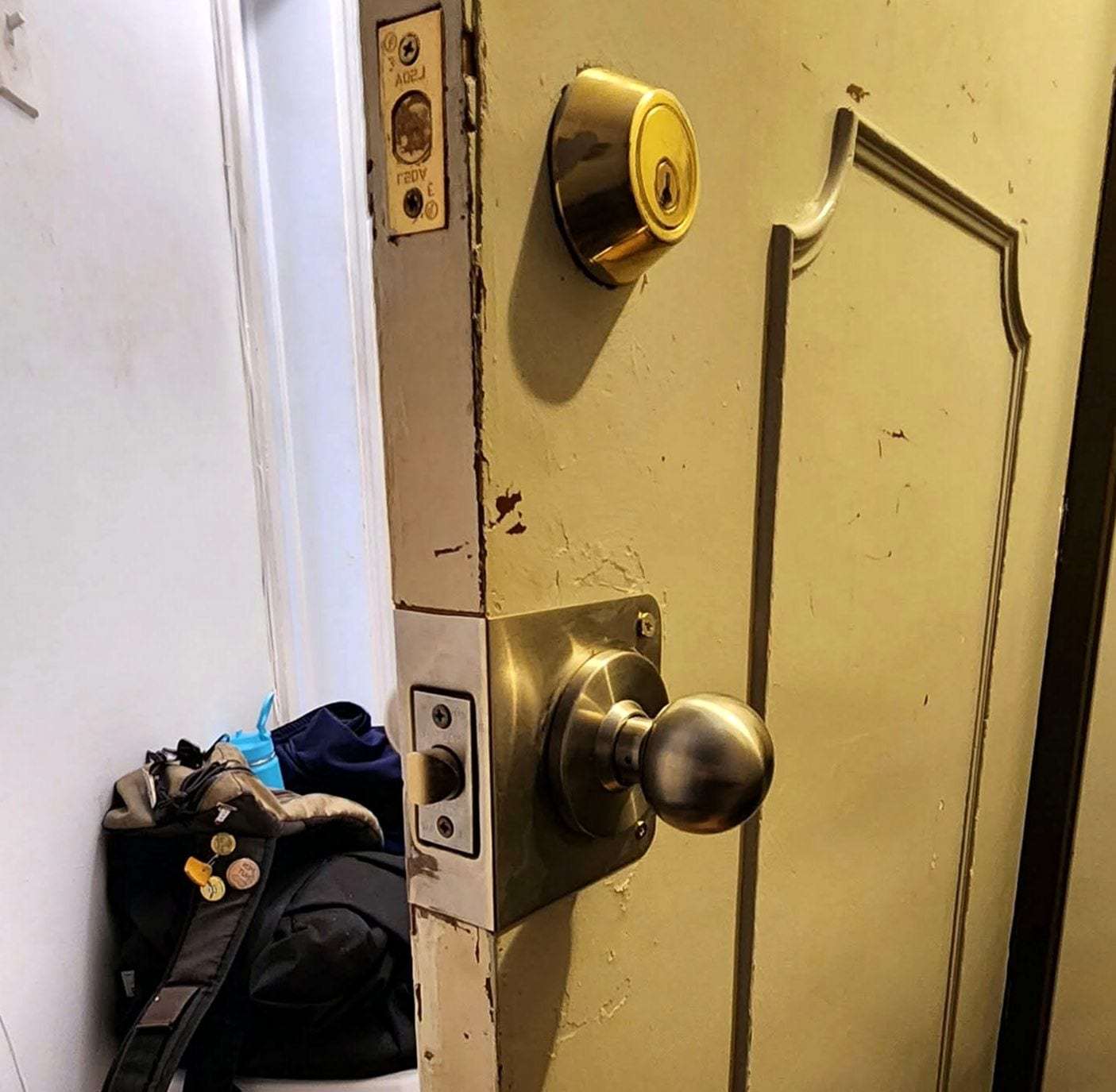
A deadbolt is the lock that does the real work on an outside door. Its solid bolt usually reaches about an inch into the frame and stays there until a key or a thumb turn draws it back, while a spring latch on its own only holds the door closed. A new lock is worth fitting when:
- The door has no deadbolt at all, only a knob or a lever.
- The lock on it is out of date: flimsy, worn, or easy to force.
- A new or replacement door has been hung and needs its locks.
- You want a keypad or a smart lock in place of a key, or alongside one.
- The lock does not suit the door, such as an indoor privacy knob on a back door.
Where a door already has a deadbolt that is worn or damaged, the job is repair or replacement rather than a new installation, and the holes in the door are already there to use.
Lock Types and Where Each One Fits
Most homes need only two or three kinds of lock, but the choice still matters, because each one trades convenience against strength in its own way.
| Lock type | Where it is used | What it does | What to know before choosing |
|---|---|---|---|
| Single-cylinder deadbolt | Front and back doors of houses and apartments | A key outside and a thumb turn inside move a solid bolt into the frame | Quick to open from inside; glass within reach of the thumb turn is its weak spot |
| Double-cylinder deadbolt | Doors with glass close to the lock | Needs a key on both sides, so a hand through broken glass cannot open it | Slower to get out of in a fire, and building rules may limit it on a home’s main exit |
| Knob or lever with a keyed latch | Outside doors, under a deadbolt | A spring latch holds the door shut and locks with a key or a button | The latch alone is easy to force, so an outside door wants a deadbolt as well |
| Keypad or smart lock | Doors used by several people, or where keys keep going missing | Opens with a code, and some models with a phone, as well as a key | Batteries need changing, and many keep a key cylinder as a backup |
| Mortise lock | Older front doors and many commercial doors | A lock body set into a pocket in the door’s edge, holding the latch and the bolt together | Sturdy and long-lived; swapping one for a modern lock can leave holes to cover |
| High-security cylinder | Back doors, storerooms and other doors that need more than a standard lock | Built to resist picking and drilling, with keys controlled by the key system’s maker | Spare keys are harder to get, so plan how many you need and who holds them |
Levers are easier than knobs for hands that are full, wet or stiff, which is why many households choose them for the door they use most. Whatever the handle, the deadbolt above it is what keeps the door locked against force.
Boring a Door for a New Deadbolt
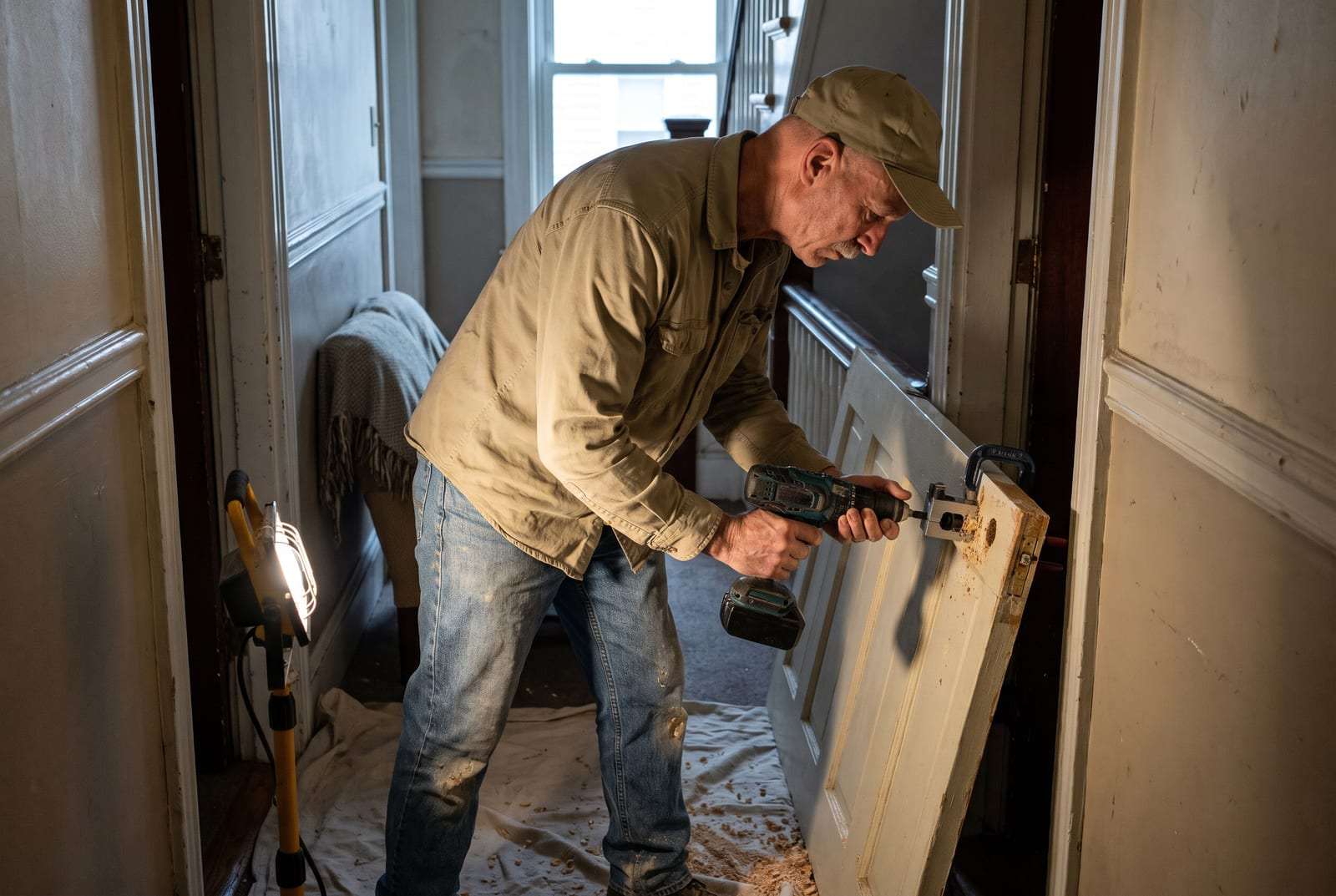
On a door that has never had a deadbolt, the lock needs two holes: a large one through the face of the door for the lock body, usually 2-1/8 inches across, and a smaller one into the edge for the bolt, usually 1 inch. The edge then gets a shallow recess so the bolt’s faceplate sits flush, and the frame gets a matching hole and recess for the strike plate.
A locksmith will usually clamp a boring jig to the door to keep both holes square and at the right distance from the edge, the backset. Holes that wander leave a bolt that drags on its strike, and a door bored badly is hard to put right afterward.
The strike plate matters as much as the lock. A deadbolt is only as strong as what it locks into, so the strike is best held with long screws that pass through the door frame into the wall framing behind it, rather than only the short screws packed with many locks.
Older doors do not always follow modern sizes. A door thicker or thinner than usual, a solid old panel door, or a door already cut for an earlier lock may need a different kit, a longer bolt or a reinforcing plate, and that is worth knowing before any drilling starts.
Fitting a Lock to Different Kinds of Door
Can a new lock be fitted to any door?
Nearly any door can take a lock, but not every lock suits every door. A solid wood or steel outside door takes a standard deadbolt well. A hollow-core inside door has little in it to hold one, a metal door may need a lock made for its thickness, and a glass door takes its own rails and strikes.
Where an earlier lock has left holes of the wrong size or in the wrong place, a cover plate or a lock made to fit the old cut-outs often solves it without a new door.
Should a new deadbolt take the same key as my other locks?
Usually it is worth it: one key for the front door, the back door and the new deadbolt is easier to live with. The locks need to take the same kind of key blank. When they do, a rekey brings them onto one key; when they do not, new cylinders can.
Is a keypad lock as secure as a keyed deadbolt?
A good keypad deadbolt throws the same kind of bolt into the same strike plate, so the bolt is no weaker. The weak points lie elsewhere: a code given to too many people, batteries left to run down, and a backup key cylinder no better than a basic lock. Change the code whenever someone moves out, and keep spare batteries in the house.
Details to Gather Before Choosing a Lock
None of these is needed before you call, but each one makes the choice of lock quicker to settle:
- The thickness of the door, if you know it: outside doors are usually 1-3/4 inches and many inside doors 1-3/8 inches.
- How many doors need new locks, and which ones: front, back, side, basement or inside.
- The brand name on the current lock, if one is visible on its face or on the edge of the door.
- Whether the new locks should all open with one key.
- What the door is made of: solid wood, a hollow inside door, steel or glass.
High-Security Cylinders and Commercial Locks
Back doors and storerooms are where a standard lock is most often not enough. A back door opens onto an alley or a yard out of sight of the street, and a storeroom holds the stock or the equipment a business runs on. Both are worth a high-security cylinder: one built to resist picking, drilling and forcing, with keys an ordinary hardware counter usually cannot copy.
Because those keys are controlled, it is worth deciding at the start how many there will be and who carries them. A short list of key holders is part of what makes the cylinder worth having.
Commercial lock installation is its own kind of work. A shop or office door may open hundreds of times a day, so it needs heavier hardware than a house door: commercial-grade levers and deadbolts, storeroom locks that stay locked from outside, and locks made for the door’s material and frame. Where several doors should each keep their own key while one key opens them all, that is a master key system, built into the cylinders.
Planning a New Lock for Your Door
Call to talk through the door and the lock you have in mind, from a first deadbolt to a keypad or a high-security cylinder.